Health Impacts from Silica Dust
November 2025. The jury is in. Respirable Silica Dust above 1% is toxic to humans.
The 1% Crystalline Silica threshold applies to the bulk material, not the respirable fraction. The Safe Work Australia Model Code of Practice: Managing Risks of Respirable Crystalline Silica in the Workplace (November 2025), Part 2.1 and Appendix E, defines a Crystalline Silica Substance as “a material containing at least 1% crystalline silica, determined as a weight/weight (w/w) concentration.” This is set out in Regulation 529A of the WHS Regulations. The 0.05 mg/m³ figure is a separate measure — it is the airborne workplace exposure standard for the respirable fraction over an 8-hour time-weighted average, and it is the obligation that applies once a material is already classified as a CSS. Published mineralogical analysis of Strzelecki Group mudstones records quartz content well in excess of 1% w/w, which means the material meets the CSS definition and processing it triggers the full regulatory framework — risk assessment, control plan, air monitoring, health monitoring, and worker registration. To our knowledge, none of this has been disclosed to the community for WA495. That is the issue we have asked WorkSafe Victoria to examine. The Code is publicly available on the Safe Work Australia website. We encourage anyone interested to read it directly. https://www.safeworkaustralia.gov.au/doc/model-code-practice-managing-risks-respirable-crystalline-silica-workplace
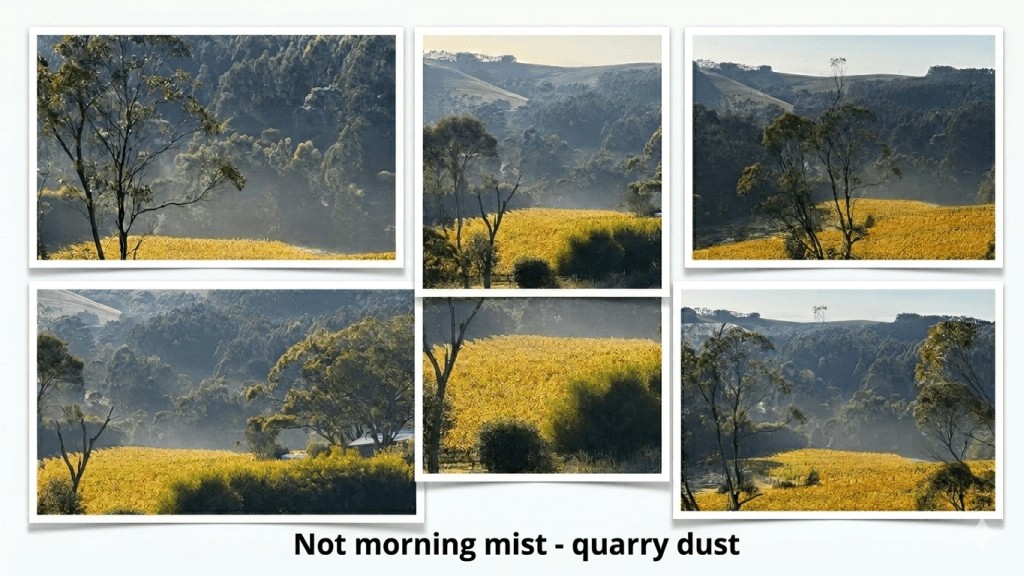
Photos show dust coming from FCQ WA495 – as seen from Old Fish Creek – Yanakie Road. You get a gold star ⭐️ for reading all the way to the end!
 Prom Coast Guardians